Typical scope
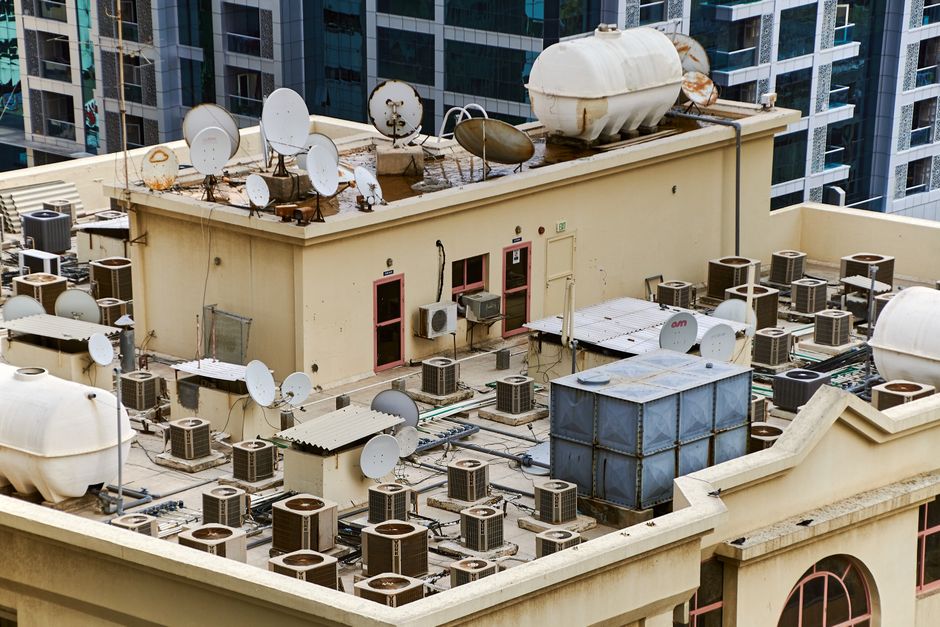
- HVAC curb, pitch pan and condensate line repairs
- Drain, scupper and overflow rebuilds on large roof areas
- Parapet coping and termination detailing
- Walkway pad installation on service routes to rooftop units
- Infrared and capacitance moisture surveys before scoping a replacement
- Phased tear-off and re-cover so the building stays occupied
- Certificates of insurance and additional-insured endorsements for building owners
Where commercial roofs leak
Almost never in the open field. The usual sources are HVAC curbs where the counterflashing has lifted or the pitch pan dried out, condensate lines dumping onto and eroding the membrane, drains where the clamping ring loosened or the strainer went missing, blocked scuppers, parapet coping joints, and the conduits and gas lines added over the years without a proper boot. Add foot traffic: technicians walking the same unprotected route to the same rooftop unit for a decade compress and abrade a strip of membrane until it splits. Walkway pads are cheap insurance.
The insulation is the expensive part
The membrane is a small fraction of a commercial roof assembly. Beneath it sits polyisocyanurate insulation, and wet polyiso does not recover: it loses R-value permanently, corrodes the fastener plates and adds weight. A leak that ran through one wet season can mean replacing far more insulation than membrane. That is the argument for responding immediately rather than waiting for the next budget cycle.
Practical points for owners and managers
Verify the licence at cslb.ca.gov, roofing is the C-39 classification and C-39 contractors must carry workers' compensation even with no employees. Ask for a certificate of insurance naming the owner as additional insured before anyone goes up. Establish who is responsible under the lease before the work is authorised: triple-net leases often place maintenance on the tenant while structural replacement stays with the owner, but the wording varies enormously. And if the roof carries a manufacturer system warranty, confirm the contractor is an approved applicator, or the repair will end the coverage.