Flat Roof & Low-Slope Roofing in Sierra Village: what to know
A low-slope roof is a different trade from a pitched one. There is no gravity helping the water off, so the whole assembly, membrane, seams, flashings, drains and slope, has to do the work. Contractors who mainly install tile and composition shingle around Sierra Village are often genuinely good at that and genuinely out of their depth on a welded membrane.
Higher elevation means stronger UV, wider daily temperature swings and a short window in which repair work can actually be done well. Adhesives and coatings have minimum application temperatures, so a repair pushed into late autumn near Sierra Village may not cure as specified. Planning membrane work for the warm months is not a preference here, it is a requirement of the materials.
The flat roofs around Sierra Village
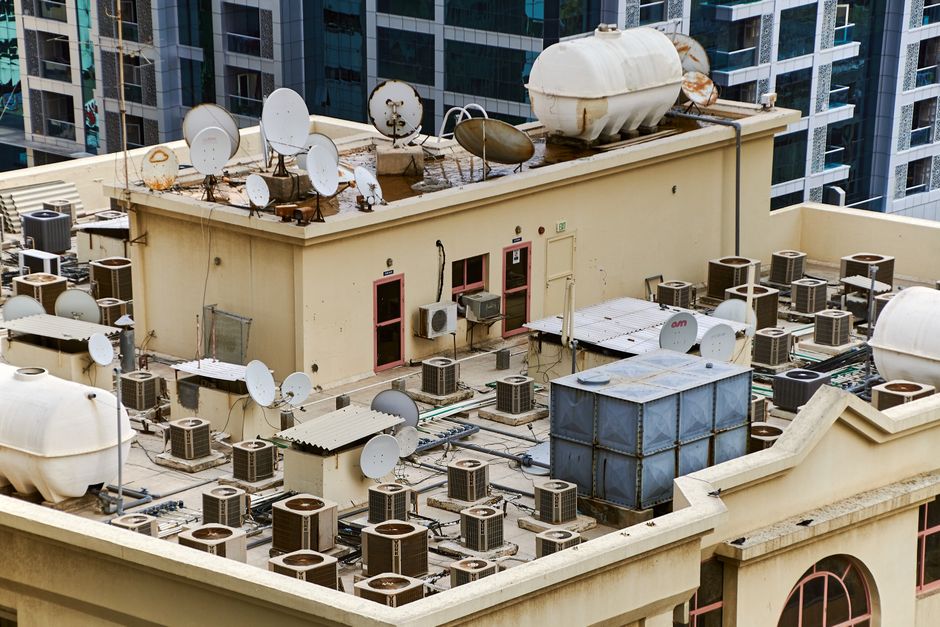
Small commercial buildings, strip retail, light industrial, two-storey offices, are almost all low-slope, and in Sierra Village many are old enough to be on their second or third membrane. Each re-cover adds weight and buries the previous problem. Before quoting a replacement, a competent contractor will find out how many layers are already up there, because a tear-off to deck and a re-cover are very different jobs and different prices.
What to verify before you sign
California requires a licence for any job of $500 or more in combined labour and materials, and roofing is the C-39 classification. Because roofing carries the highest injury rates in construction, C-39 licensees must carry workers' compensation even with no employees. Check the number yourself at cslb.ca.gov rather than taking a card at face value, and ask for a certificate of insurance.
On the paperwork side, California limits the down payment on a home improvement contract to $1,000 or 10 percent of the contract price, whichever is less, and requires a written contract with a defined scope and payment schedule. Permits are usually pulled by the contractor with the Sierra Village building department; that permit triggers a Title 24 compliance check, which on a low-slope roof normally means a CRRC-rated cool-roof surface and, depending on the scope, added insulation. Get the specification in writing so there is no argument at inspection.
Getting a quote you can actually compare
The single most useful thing you can do before accepting a flat roof quote in Sierra Village is ask for core samples. A core cut tells you how many roofs are already on the deck, whether the insulation is wet, and what condition the deck is in. Without that, every quote is an estimate built on a guess, and change orders follow.
- Core cuts or a moisture survey, how much of the insulation is saturated?
- System specification, membrane type, mil thickness, attachment method, insulation R-value.
- Ponding, tapered insulation or additional drains, or is the low spot simply being covered?
- Details, how curbs, drains, scuppers and parapets are being flashed. Details are where roofs leak.
- Warranty, who backs it, for how long, and what is excluded. Ponding is almost always excluded.